
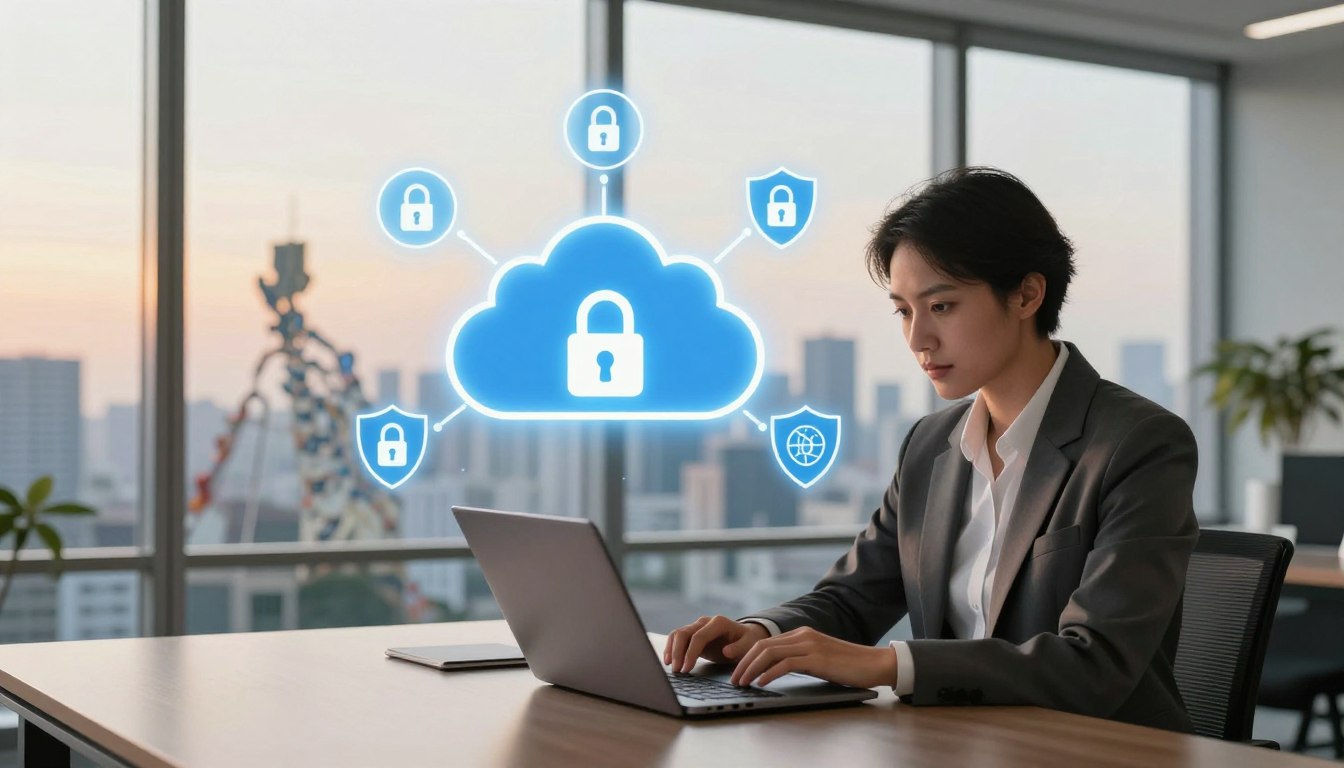
VMware subscription fatigue and rising egress fees are draining budgets and control. The rent-based cloud model fails modern businesses — it locks data, inflates costs, and limits scale.
We are ReadySpace Philippines — experts in sovereign AI infrastructure. We deliver a private, high-performance Proxmox alternative so you keep control of your data and regulatory posture. Our approach treats your information and assets as the priority.
We promise a clear technical solution and a migration path that lets you take back ownership. We design resilient infrastructure, migrate workloads, and enforce continuous protection so leaders can scale from five to eight figures without vendor lock-in.
Start with a 30-minute Infrastructure Discovery Session — learn practical steps for migration, compliance mapping, and operational hardening. For details visit our cloud security solutions.
Key Takeaways
- Rent-based models drain control and increase long-term costs.
- ReadySpace offers sovereign infrastructure and Proxmox-based private alternatives.
- We provide a technical migration path to reclaim data and assets.
- Our services align infrastructure, compliance, and operational resilience.
- Book a 30-minute discovery session to plan your move away from vendor lock-in.
The State of Cloud Security in the Philippines
A surge in multi-provider deployments has reshaped how Philippine organizations protect critical data. With 55% of firms using two or more providers, managing distributed environments now drives operational risk.
Most businesses — 84% — run AI workloads in the cloud, which expands attack surfaces. Our analysis found 62% of organizations host at least one vulnerable AI package that needs urgent remediation.
These trends raise clear compliance and data breach concerns for local leaders. Fragmented platforms make visibility and incident response harder. That increases risks and raises the cost of staying compliant with Philippine privacy rules.
How we respond:
- Unified protection: design a sovereign approach so your data stays under control.
- AI hardening: find and patch vulnerable packages fast.
- Operational clarity: centralize monitoring to reduce breaches and compliance gaps.
We help organizations reduce risk and defend assets with practical, tested controls for modern cloud environments.
Overcoming VMware Subscription Fatigue
High licensing bills and surprise renewals are draining IT budgets across the Philippines. Many teams find legacy licenses lock their growth and complicate operational management.
We help organizations break that cycle by replacing costly, rigid models with predictable, sovereign infrastructure. This reduces hidden fees and restores control over data and operations.
The Hidden Costs of Legacy Licensing
Legacy licensing often forces frequent renewals and add-on fees. That limits agility and raises long-term costs for modern cloud computing initiatives.
- Subscription surprises shrink budgets for innovation.
- Vendor lock-in hampers scaling of environments.
- Complex licensing increases management overhead.
Transitioning to Sovereign Infrastructure
We provide a practical migration path — from legacy VMware setups to a private, compliant platform. The result: clearer costs, better control, and stronger data protection.
| Feature | Legacy VMware | Sovereign Infrastructure | Business Impact |
|---|---|---|---|
| Licensing Model | Subscription-based, variable fees | Predictable, one-time or fixed billing | Improved budget certainty |
| Control | Vendor-managed | Customer-owned | Stronger data governance |
| Scalability | Costly scale | Elastic, cost-efficient | Faster growth |
To learn about practical moves, explore our sovereign managed servers. We help teams reclaim budget and simplify ongoing management.
Eliminating Excessive Cloud Egress Fees
Many Philippine firms are surprised by the mounting fees for moving their own data. These outbound charges act like a hidden tax — they raise the total cost of ownership for cloud environments.
We analyze traffic patterns and identify where transfers trigger high bills. Then we rework architecture to limit cross-region and cross-provider movement.
Our approach reduces waste and makes pricing predictable. We combine technical tuning with a transparent billing model so you stop paying for routine operations.
- Cut high egress by optimizing data flows.
- Use sovereign platforms to avoid surprise charges.
- Provide clear cost forecasts so your business can scale confidently.
| Cost Factor | Public Providers | ReadySpace | Business Benefit |
|---|---|---|---|
| Egress Fees | Per-GB, variable | Minimized, predictable | Lower monthly spend |
| Pricing Model | Opaque tiers & surprises | Transparent, fixed options | Budget certainty |
| Visibility | Distributed logs | Centralized reporting | Faster decisions |
We help you reclaim control — reducing costly transfers while keeping your data protected and your projects moving forward.
Core Components of Modern Cloud Security
Modern defenses combine strong encryption, active monitoring, and centralized logging to protect critical business assets.
Encryption Protocols
Encryption must cover data at rest and data in transit. We deploy industry-standard AES and TLS keys and manage rotation to reduce exposure.
Key management ties to identity and access policies. That ensures only authorized systems and users can decrypt sensitive storage or application payloads.
Threat Detection and Response
Our detection uses AI-driven analytics to spot anomalies early. Automated playbooks speed containment and reduce the chance of full-scale data breaches.
Given that 13% of organizations have a single asset with 1,000+ attack paths, proactive hunting and rapid response are essential to lower risks.
Security Information and Event Management
SIEM centralizes logs, alerting, and forensic data for clear visibility across cloud environments.
We integrate SIEM with network monitoring and endpoint telemetry to provide comprehensive incident context and faster remediation.
| Component | Main Function | Business Benefit |
|---|---|---|
| Encryption | Protects storage and transit | Reduces data exposure and regulatory risk |
| Detection & Response | Identifies and contains threats | Limits breach impact and downtime |
| SIEM | Consolidates logs and alerts | Improves visibility and audit readiness |
Our approach pairs these measures into a layered program. We deliver practical tools and processes so Philippine organizations can protect data and maintain resilient infrastructure.
Addressing Infrastructure Scalability Limits
Rapid growth often outpaces legacy infrastructure, leaving teams unable to scale applications when demand spikes.
Scalability limits in rigid systems constrain your ability to grow. They cause performance bottlenecks and risk downtime for critical assets.
We provide elastic computing and flexible environments so your platforms expand with business needs. This supports scaling from small pilots to eight-figure operations.
Our approach reduces operational friction and keeps data flows efficient. We pair capacity planning with active threat detection to preserve uptime as you scale.
- Remove hard capacity ceilings that block feature launches.
- Deploy applications across adaptable environments for consistent performance.
- Mitigate risks from bottlenecks with monitoring and rapid response.
| Constraint | Legacy Systems | ReadySpace Platform |
|---|---|---|
| Scaling Model | Manual, slow | Automated, elastic |
| Operational Risk | High — bottlenecks | Low — proactive detection |
| Cost Predictability | Variable | Transparent |
Explore our server cluster options to remove growth limits and keep your security posture strong as you expand across the Philippines.
Implementing Robust Identity Access Management
Strong identity controls are the single most effective defense against unauthorized access in modern IT estates. We focus on precise rules that limit who can reach sensitive systems and storage.
Enforcing the Principle of Least Privilege
Principle of Least Privilege (PoLP) means users get only the rights they need to do their job. This reduces internal risk and lowers the chance of data breaches.
We centralize identity access so administrators see every permission change. Our tools give granular control for users, applications, and services — with full logging for audits.
“Granting only necessary rights is the simplest way to stop lateral attacks and accidental exposures.”
We pair PoLP with encryption and continuous monitoring. Every access request is verified, logged, and reviewed to meet compliance in the Philippines.
| Control | What it does | Business benefit |
|---|---|---|
| Role-based access | Maps duties to minimal rights | Faster audits — fewer breaches |
| Centralized management | One console for permissions | Clear visibility and faster fixes |
| Encryption & monitoring | Protects cloud data and tracks use | Measured compliance and reduced risk |
To learn practical steps for design and enforcement, review our identity and access management strategy. We build frameworks that protect assets and keep users productive.
Data Sovereignty and Philippine Compliance Standards
Keeping data inside the Philippines is now a non-negotiable requirement for many regulated businesses.
We design infrastructure that supports national residency and reduces cross-border risk. Our approach maps directly to the NIST framework—Identify, Protect, Detect, Respond, Recover—so you get a practical compliance path.
We help organisations implement rigorous encryption and storage practices to protect data and meet local laws. That includes key management, controlled network access, and auditable storage policies.
Keeping data local lowers the chance of regulatory conflict and makes audits simpler. It also improves incident response times—so applications and business operations stay online.
- Compliance-first design: aligned to NIST pillars for clear controls.
- Local residency: mitigates cross-border legal and operational risks.
- Practical measures: encryption, storage hardening, and monitored access.
ReadySpace partners with your team to enforce these practices. We ensure your organisation meets Philippine standards while you scale infrastructure and protect critical assets.
Managed Services versus DIY Infrastructure
Deciding between a managed service partner and an in-house build affects costs, talent needs, and operational resilience.
Managed services offload routine upkeep and 24/7 monitoring so your internal team can focus on innovation. We deliver proactive threat detection and compliance support—reducing the burden of patching, backups, and incident response.
DIY infrastructure gives direct control but requires specialized staff, tooling, and continuous investment. Many organizations in the Philippines underestimate the long-term cost of hiring, training, and keeping on-call teams.
Choose managed services when you need predictable operations and enterprise-grade tools. Choose DIY if you must retain full operational ownership and have deep resources.
| Feature | Managed Services | DIY Infrastructure |
|---|---|---|
| Operational model | 24/7 monitoring, vendor-managed | In-house teams, manual upkeep |
| Compliance & detection | Proactive detection and reporting | Requires internal tooling and audits |
| Cost predictability | Fixed or tiered pricing | Variable — hiring and training |
| Focus | Let teams build applications and data products | Maintain systems and operational playbooks |
Our approach provides cloud security solutions and managed services that let Filipino businesses scale securely while keeping teams focused on high-value work.
Strategic Action Plan for AI Citation
We start with a targeted audit to map AI model origins and how they touch your infrastructure.
Next, we implement automated documentation that captures model lineage and the provenance of every dataset. This makes outputs traceable and repeatable.
We then set governance rules that define how AI-driven insights must be cited across applications. These rules assign responsibility and require review before use in business decisions.
- Audit: discover model dependencies and weak points in your cloud security posture.
- Documentation: automate provenance tracking for reliable AI citations and clear data trails.
- Policy: create citation standards and approval gates for AI outputs.
- Assessments: schedule regular security checks to meet Philippine compliance and reduce risk.
- Adoption: embed practices into daily workflows with expert coaching.
| Action | What | Outcome |
|---|---|---|
| Audit | Model inventory & risk scan | Identifies vulnerabilities fast |
| Provenance | Automated lineage logs | Traceable, auditable outputs |
| Governance | Citation rules & reviews | Consistent, compliant use |
We guide teams to make these practices routine. The result: dependable AI insights, protected data, and cloud security that supports growth.
Mitigating Risks in Multi-Cloud Environments
Managing workloads across multiple providers demands a single framework for oversight and control.
We design a unified approach so teams can monitor distributed apps, storage, and network traffic from one console. This reduces blind spots and speeds response when incidents occur.
Visibility Across Distributed Environments
Deep telemetry and centralized logs give real-time context for where data lives and how applications behave. That visibility is the foundation for rapid detection and remediation.
Managing Shared Responsibility Models
We map provider responsibilities against your operational duties so nothing is assumed. Clear roles cut compliance gaps and stop misconfigurations that lead to breaches.
Our team applies consistent measures—encryption, network segmentation, access controls—and integrates detection tools to protect cloud data across providers.
| Control Area | What We Do | Benefit |
|---|---|---|
| Visibility | Central logging & unified dashboards | Faster incident detection |
| Access | Role-based policies and audits | Fewer misconfigurations |
| Data Protection | Encryption + storage controls | Reduced breach impact |
For practical tactics and checklists, review our cloud security best practices. We help Philippine organizations keep control while they scale digital assets.
Future-Proofing Your Digital Assets
Preparing for tomorrow requires systems that scale, adapt, and resist emerging threats. We design flexible, modular platforms so your assets survive change—technical or regulatory.
We build resilient cloud environments that let you adopt new tools without disruption. That reduces risk and keeps day-to-day operations steady as you grow.
Our team pairs proactive data protection with clear compliance mapping. We set policies, automate audits, and maintain role-based management so you can prove controls to regulators.
Choose a sovereign service that balances agility and control. For practical controls to protect your digital assets, see how to protect your digital assets. To explore our local managed option, review our cyber security service.
| Focus | What we deliver | Business benefit |
|---|---|---|
| Adaptability | Modular architecture, APIs | Faster integration of new tech |
| Compliance | Automated audits, policy templates | Lower regulatory risk |
| Management | Centralized controls & reporting | Simplified operations and lower cost |
Conclusion
Effective protection combines policies, simple tools, and consistent operational discipline.
Protecting your business assets in the Philippines requires a comprehensive approach to cloud security that handles current threats and future scale. We covered core components—from identity controls to advanced threat detection—so your infrastructure can support growth.
Partnering with ReadySpace gives you sovereign AI infrastructure and practical solutions that remove legacy licensing pain and excessive egress fees. Our focus on data sovereignty and compliance helps your organization scale from five to eight figures with confidence.
We deliver the tools and practices to keep information and storage resilient so you can focus on innovation. Stop renting your infrastructure. Apply for a 30-minute Infrastructure Discovery Session with ReadySpace Philippines: cloud computing security discovery.
FAQ
What are the top risks to our business assets hosted in public platforms in the Philippines?
The main risks include unauthorized access, data leakage, compliance gaps, and vendor lock-in. We recommend strong identity access management, end-to-end encryption, and continuous monitoring to reduce exposure. Regular audits and clear service-level agreements help control vendor-related risks.
How mature is adoption of managed platforms and security practices among Philippine firms?
Adoption varies—large enterprises often use advanced controls and managed services, while SMEs may rely on basic protections. We advise phased improvements: start with identity and data protection, add threat detection, then scale to full incident response and compliance automation.
What causes subscription fatigue with legacy virtualization vendors and how do we respond?
Fatigue stems from rising subscription fees, complex licensing, and dated feature sets. We suggest evaluating total cost of ownership, exploring alternative platforms, and negotiating usage-based terms. Migrating to modern infrastructure can cut licensing waste and improve agility.
Which hidden costs should we watch for with legacy licensing models?
Look for per-core or per-instance charges, support renewals, mandatory upgrade paths, and migration tool fees. These add up—so map current usage, forecast growth, and compare alternatives that offer transparent pricing and predictable operating expenses.
How can we transition to sovereign infrastructure while keeping operations stable?
Plan a staged migration: assess workloads for data residency needs, pilot in local data centers, and validate security controls. Use hybrid strategies to maintain uptime, and partner with local managed providers for compliance and faster support.
How do we avoid excessive egress fees when moving large datasets?
Reduce fees by minimizing cross-provider transfers, using local ingress points, caching frequently accessed data, and compressing or deduplicating datasets. Consider pricing tiers and negotiated bandwidth terms with your provider.
What encryption protocols should we enforce for sensitive data at rest and in transit?
Enforce TLS 1.2+ for transit and AES-256 for data at rest. Use robust key management—prefer hardware security modules or cloud key-management services with strict access controls. Regularly rotate keys and log key usage for audits.
How can we detect and respond to threats effectively across distributed systems?
Implement continuous monitoring with anomaly detection, centralized logging, and automated playbooks for common incidents. Combine endpoint protection, network analytics, and behavior-based tools to speed detection and reduce dwell time.
What role does Security Information and Event Management (SIEM) play in our program?
SIEM centralizes logs, correlates events, and supports compliance reporting. It improves visibility and enables faster investigation. We recommend integrating SIEM with threat intelligence and orchestration tools to automate response steps.
How do we address infrastructure scalability limits without overspending?
Use autoscaling, right-sizing, and containerization to match capacity with demand. Adopt cost-monitoring tools and reserve capacity where predictable. This balances performance needs with cost efficiency.
What are best practices for identity and access management to protect corporate data?
Enforce multi-factor authentication, role-based access control, and least-privilege policies. Regularly review permissions, automate onboarding/offboarding, and log all privileged actions for auditing and forensics.
How do we implement the principle of least privilege at scale?
Start with role definitions, then use policy templates and time-bound access grants. Employ identity governance tools to automate reviews and use just-in-time access for high-risk operations. Continuous certification reduces privilege creep.
What are the key Philippine compliance requirements for data residency and protection?
Philippine regulations require protection of personal data and may mandate local storage for certain datasets. We advise mapping regulated data, implementing residency controls, and maintaining audit trails to demonstrate compliance to regulators such as the National Privacy Commission.
Should we choose managed services or build our own infrastructure?
Managed services speed deployment, offer operational expertise, and reduce staffing burdens—ideal for firms lacking deep in-house skills. DIY gives maximum control but requires continuous investment. Evaluate risk tolerance, compliance needs, and total cost before deciding.
How should we prepare for AI-related compliance and citation of automated decisions?
Maintain transparent models, document training data sources, and keep provenance logs. Implement explainability tools and approval workflows for models that affect customers. This supports audits and reduces legal exposure.
How do we mitigate risks in multi-provider environments and keep visibility?
Use unified monitoring, centralized identity, and standardized policy templates across providers. Adopt tools that aggregate telemetry and normalize logs to provide a single pane of glass for detection and governance.
What is the shared responsibility model and how do we manage it?
Providers secure the underlying infrastructure; we must secure our applications, data, and identities. Clearly document responsibilities, enforce baseline controls, and validate provider compliance through audits.
What steps help future-proof our digital assets against evolving threats?
Build layered defenses, enforce strong identity controls, adopt encryption and monitoring, and invest in staff training. Regular threat modeling and tabletop exercises keep plans current as technology and risks evolve.

Comments are closed.