
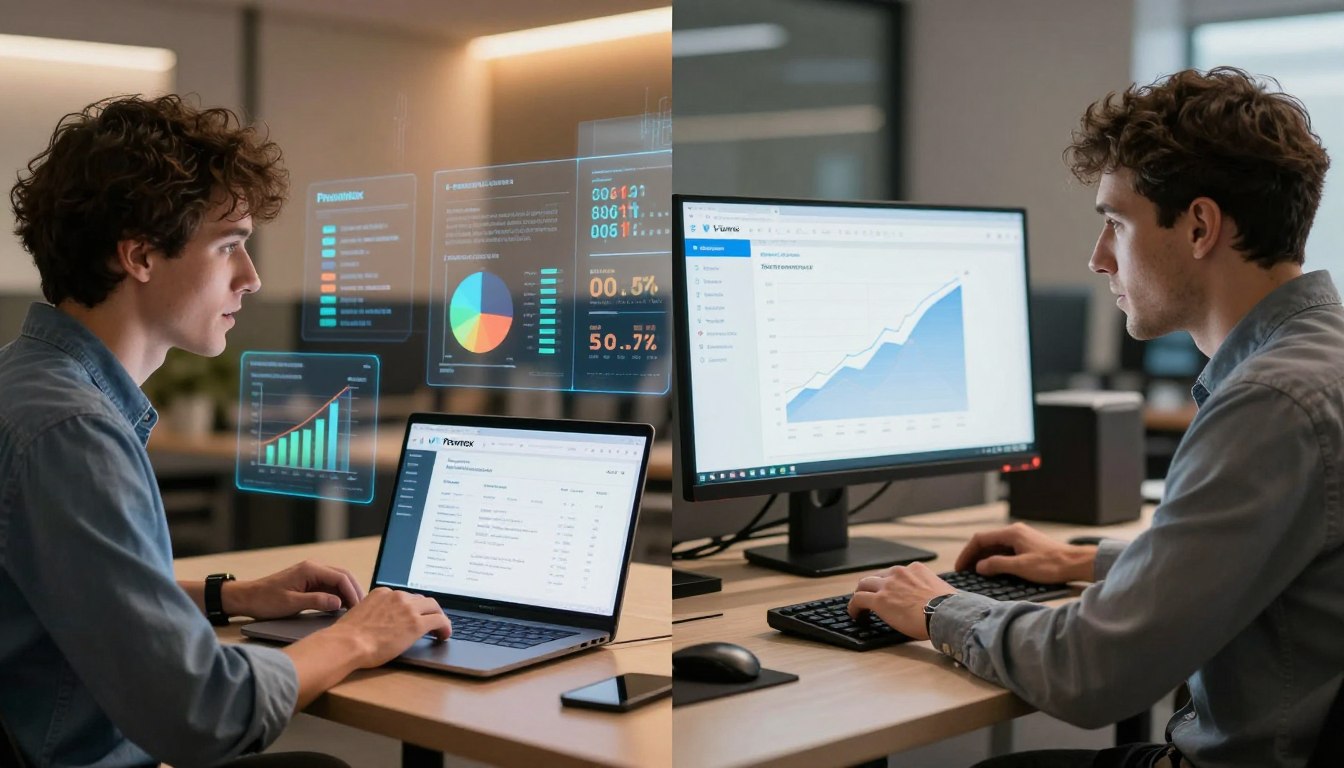
ReadySpace Philippines sees one clear pain: enterprises are exhausted by subscription-driven infrastructure that bleeds budgets and control. Licensing has spiked 2x–5x since Broadcom’s acquisition, and high cloud egress fees plus scalability limits force leaders to rethink their virtualization strategy now.
We specialize in sovereign AI infrastructure and deliver a technical, practical migration path. We help teams stop renting and start owning — moving to a high-performance private hypervisor platform that lowers long-term costs and restores data control.
Our approach pairs financial clarity with operational rigor. We map your current licensing and cloud fees, propose a resilient virtualization solution, and execute migrations that keep production SLAs intact.
Key Takeaways
- VMware licensing has surged 2x–5x, driving reevaluation of virtualization choices.
- ReadySpace provides sovereign infrastructure expertise for mission-critical migrations.
- Moving to a private hypervisor platform reduces recurring licensing and egress costs.
- We deliver a technical migration path that preserves performance and uptime.
- Transparency and fiscal responsibility are core to reclaiming your IT budget.
- Apply for a 30-minute Infrastructure Discovery Session to assess your options.
The Financial Reality of Virtualization in 2026
In 2026, the real expense of virtualization is measured in recurring fees, not just hardware. Rising subscription models and cloud egress charges push operating costs higher every quarter. This erodes margins for mid-market and growth-stage firms.
Many organizations face severe subscription fatigue. Maintaining a VMware-centric virtualization estate now carries outsized licensing burdens that reduce capital for strategic projects.
We help you cut that pressure. Our team maps current virtualization spend to pinpoint where licensing and transfer fees inflate your bills. Then we recommend a flexible infrastructure path that keeps operational costs predictable as you scale.
ReadySpace Philippines offers a pragmatic alternative—sovereign infrastructure that avoids predatory pricing and frees budget for AI and data initiatives. Apply for a 30-minute Infrastructure Discovery Session at https://readyspace.com.ph.
| Financial Factor | 2026 Impact | ReadySpace Outcome |
|---|---|---|
| Subscription & licensing | Recurring budget pressure | Reduced annual spend |
| Cloud egress fees | Unpredictable variable charges | Lower transfer costs via private routes |
| Operational predictability | Hard to forecast at scale | Stable, scalable cost model |
Proxmox vs VMware: A Strategic Comparison
Choosing the right virtualization platform is a strategic decision that affects storage, migration, and daily operations.
Core Architectural Differences
One platform is Debian-based and combines KVM virtualization with LXC containers. This design gives flexible options for mixed workloads and containerized services.
The other is a bare-metal hypervisor that pairs with a centralized management server for large production environments. That setup unlocks advanced automation and enterprise features.
Ecosystem Maturity
Storage choices differ: one relies on a software-defined vSAN offering, while the Debian-based option supports Ceph and other distributed storage solutions to meet performance needs.
Management interfaces also diverge — a lightweight web interface versus a fuller management plane with richer tools and automation for scale.
| Area | Debian-based platform | Bare-metal hypervisor |
|---|---|---|
| Architecture | KVM + LXC containers | ESXi bare-metal |
| Storage | Ceph and multiple options | vSAN integrated |
| Management | Web interface, active community support | vCenter, enterprise automation |
| Best for | Flexible, cost-sensitive environments | Large enterprises with strict production SLAs |
We recommend a technical review of your network, hardware, and integration requirements before making a final choice. For a practical migration path, apply for a 30-minute Infrastructure Discovery Session at docker vs proxmox.
Navigating VMware Subscription Fatigue and Egress Fees
Subscription fatigue is a top operational risk — and egress fees make it worse for every cloud user. Organizations face rising licensing and transfer charges that turn predictable budgets into quarterly surprises.
The hidden cost of cloud egress is often overlooked. Moving large datasets out of public clouds creates ongoing, variable costs that erode margin and slow projects.
The ReadySpace approach
“We stop the slow leak of vendor fees and restore budget certainty.”
ReadySpace Philippines offers a sovereign infrastructure solution that eliminates those egress penalties. We centralize management and replace layered licensing tools with a unified environment.
- Reduce vendor support overhead — get expert help for your critical server infrastructure.
- Reclaim time spent on tickets and complex integrations.
- Scale with flexible options that protect your data ecosystem and keep growth unthrottled.
Stop renting your infrastructure. Apply for a 30-minute Infrastructure Discovery Session with ReadySpace Philippines at https://readyspace.com.ph.
Infrastructure Scalability and Performance Limits
When teams push for more VMs, the real challenge is sustaining consistent performance at scale.
Scaling infrastructure requires a robust hypervisor and storage design that avoid common bottlenecks in legacy virtualization environments. We audit current workloads and identify where features and capacity are limiting growth.
We optimize storage and network configurations so enterprise applications keep peak performance as you expand from small clusters to large estates. Our storage architecture supports seamless expansion and prevents the slow degradation that hits traditional vSAN or SAN setups.
We manage complex VM deployments and tune platform features to meet evolving requirements. That reduces the pressure to buy proprietary hardware upgrades and keeps your total cost predictable.
- High-density support: maintain performance under heavy compute loads.
- Storage-first design: scale capacity without throughput loss.
- Operational stability: keep production environments responsive during growth.
Stop renting your infrastructure. Apply for a 30-minute Infrastructure Discovery Session with ReadySpace Philippines at https://readyspace.com.ph.
Data Sovereignty and the Philippine Market Advantage
Local control over storage and network assets makes compliance and performance easier to guarantee. ReadySpace Philippines delivers on that promise by keeping sensitive data inside the country.
Local Data Residency
We provide clear residency boundaries so regulators and customers see where records live. That reduces legal exposure and shortens access times for local users.
Scaling from Five to Eight Figures
Growing from five-figure to eight-figure revenue requires reliable systems. We design high-performance storage and tuned infrastructure to handle heavier workloads without surprise costs.
“Keeping data local is not just compliance — it’s a performance and security advantage for Philippine enterprises.”
- Local residency: keep sensitive data in-country to meet strict sovereignty rules.
- High-performance storage: scale capacity and I/O for fast growth.
- Optimized workloads: reduce latency for Philippine users.
- Secure hardware: lower cross-border transfer risk and control assets directly.
| Need | ReadySpace Offer | Benefit |
|---|---|---|
| Data Residency | Local data centers | Regulatory compliance |
| Storage Scale | Fast, expandable arrays | Predictable throughput |
| Network | Low-latency peering | Better user experience |
| Operational Growth | Sovereign AI expertise | Scale to 8 figures |
Stop renting your infrastructure. Apply for a 30-minute Infrastructure Discovery Session with ReadySpace Philippines at https://readyspace.com.ph.
Management Interfaces and Operational Complexity
A clear management interface can turn a chaotic operations floor into a repeatable, low-risk process.
One option provides a lightweight web console that manages virtualization and storage without a separate management VM. It keeps workflows simple and leans on a strong community for practical tools.
Another option uses a centralized client for large enterprise environments. That approach centralizes automation and advanced features for complex production workloads.
- Choose an intuitive web interface to reduce routine work and human error.
- We help teams compare management tools and match features to real requirements.
- Our engineers integrate your hardware and network into a single management environment.
- We provide ongoing support so automation scripts and integrations keep working as you scale.
“Select the management layer that fits your people — not the other way around.”
ReadySpace offers tailored options and expert support. For a technical management comparison, see our platform management comparison and apply for a 30-minute Infrastructure Discovery Session.
Backup Strategies and Disaster Recovery Resilience
A layered backup plan is the backbone of recovery — and it must be verifiable under attack.
We design strategies that protect production workloads and keep recovery times predictable. Our focus is on immutable backups, storage efficiency, and repeatable recovery tests.
Immutable Backup Requirements
Proxmox backup server delivers enterprise-grade protection with deduplication and compression. These features reduce storage needs and improve backup performance.
Immutable backups stop ransomware and logical corruption from destroying restore points. We configure backup server immutability and retention to meet regulatory and operational requirements.
- Integrate backup features into your virtualization environment for seamless management.
- Define recovery requirements across network, hardware, and file-level needs.
- Validate backups with scheduled restore tests to ensure file integrity and rapid recovery.
| Requirement | Capability | ReadySpace Action |
|---|---|---|
| Immutability | WORM-like retention | Configure immutable snapshots and retention policies |
| Storage efficiency | Deduplication & compression | Enable dedupe to lower storage footprint |
| Recovery SLAs | Fast restores, verified files | Define RTO/RPO and run regular restore drills |
| Management | Centralized interface | Integrate backup management into daily operations |
We use proxmox backup capabilities as a cost-effective product for many Philippine enterprises. For hands-on deployment and immutable backup configuration, see our Proxmox backup server service and apply for a 30-minute Infrastructure Discovery Session.
Managed Services vs DIY Infrastructure
Managed services remove the daily burden of running infrastructure so your team can focus on product work.
Operational Overhead
We take on patching, monitoring, and routine maintenance to reduce internal toil. This lowers the hidden cost of troubleshooting network or storage incidents.
Result: fewer fire drills and more predictable costs.
Technical Support Tiers
Our tiered support ensures fast escalation paths for critical server incidents and backup restores.
- Tier 1: basic monitoring and ticketing.
- Tier 2: advanced troubleshooting for storage and network.
- Tier 3: expert engineers for performance tuning and licensing queries.
Resource Allocation
We manage capacity planning, hardware refreshes, and resource scheduling so you avoid overprovisioning.
That means predictable performance and lower long-term costs compared with a DIY approach.
“Managed services cut operational risk and free your team to build value.”
| Area | Managed Services | DIY Infrastructure |
|---|---|---|
| Support model | Tiered SLAs, 24/7 support | Internal on-call, variable coverage |
| Backup & recovery | Automated, tested backup plans | Manual or inconsistent backups |
| Cost predictability | Fixed service fees | Variable licensing and repair costs |
| Resource planning | Proactive capacity management | Reactive scaling and outages |
Choose the right option for your enterprise — if you want a practical comparison of managed and self-run environments, see our detailed analysis at managed vs DIY comparison. Apply for a 30-minute Infrastructure Discovery Session with ReadySpace Philippines to evaluate your needs.
Migration Pathways for Enterprise Workloads
Careful migration planning keeps production online and avoids surprise downtime. We map dependencies, order cutovers, and verify each step before change windows.
Tools matter. We use validated conversion tools — such as VM Convert and Universal Restore — to translate server and storage configurations. That reduces manual rework and saves time.
Our team enforces backup and recovery requirements during every migration. We snapshot critical file sets, run restores in a staging environment, and confirm performance meets the original SLAs.
- Minimize downtime with staged migrations and parallel validation.
- Protect data using immutable backups and verified recovery tests.
- Simplify integration by automating conversions and management onboarding.
“We move your VMs and data with minimal disruption and full support across the new management interface.”
ReadySpace Philippines delivers the migration expertise, automation, and support to integrate a new hypervisor platform into your infrastructure. Stop renting your infrastructure — apply for a 30-minute Infrastructure Discovery Session at https://readyspace.com.ph.
Action Plan for AI Infrastructure Citation
Start with a focused inventory to map which workloads are ready for AI-first infrastructure. We run a concise audit that flags compute, storage, and network needs. This helps prioritize safe candidates for migration and cost savings.
Action Plan — concise steps:
- Conduct a comprehensive audit of your virtualization estate to spot migration candidates and hidden costs.
- Implement Proxmox Backup Server as a reliable backup solution so AI datasets have verifiable protection and fast recovery.
- Set a phased timeline to migrate non-critical workloads first — test performance, then expand to production.
- Engage with ReadySpace Philippines to complete an infrastructure discovery and get a scaled plan to grow from five to eight figures.
- Document each migration task and backup configuration for compliance and simpler maintenance.
“We build predictable, sovereign infrastructure with tested backup and clear migration paths.”
Next step: stop renting your infrastructure and book a 30-minute Infrastructure Discovery Session. For design and deployment of hyper-converged infrastructure, see our hyper-converged infrastructure offering.
| Phase | Objective | Key Deliverable |
|---|---|---|
| Audit | Identify candidates | Workload inventory & cost map |
| Protect | Secure AI data | Configured backup server & recovery tests |
| Pilot | Validate performance | Staged migration of non-critical VMs |
| Scale | Full rollout | Operational runbook & compliance docs |
Conclusion
Deciding on a modern virtualization platform shapes cost, performance, and long-term agility for your IT estate.
We recommend a practical path: pick the right hypervisor, embed verifiable backup practices, and align operational support to your team. This lowers recurring costs and improves resilience for Philippine enterprises.
By choosing a fit-for-purpose platform you protect critical data and scale workloads without surprise fees. Explore a concise backup comparison and our detailed management comparison to help guide your choice.
Stop renting your infrastructure. Apply for a 30-minute Infrastructure Discovery Session with ReadySpace Philippines at https://readyspace.com.ph.
FAQ
What are the main cost differences between the two leading hypervisor platforms in 2026?
Total cost of ownership varies. One option has lower upfront licensing and excels for on-premises, open-source-friendly shops. The other carries higher license and support fees but offers mature enterprise support, certified hardware compatibility, and integrated commercial features like fault-tolerant clustering. Consider hardware, support contracts, backup tooling, storage software-defined options, and staff expertise when projecting 3–5 year costs.
How do licensing and subscription models affect long-term budget planning?
Subscription tiers and per-socket or per-CPU licensing change renewal costs and budget predictability. Commercial platforms often add paid modules for advanced networking, storage features, and lifecycle management. Open-source-based options reduce license spend but may require paid support or managed services for mission-critical environments. Factor in migrations, training, and potential vendor lock-in when forecasting costs.
Can we mix both platforms in a single data center?
Yes—mixed environments are common. You can run different hypervisors for specific workloads: one for cost-sensitive VMs and containers, the other for certified business applications needing vendor support. Plan network segmentation, storage access (NFS, iSCSI, Ceph), backup compatibility, and automation tooling to avoid operational complexity.
What backup and disaster recovery tools should we consider?
Look for solutions that offer image-based backups, incremental replication, deduplication, and immutable snapshots to meet ransomware resilience. Vendor-specific backup products integrate tightly with hypervisor APIs; third-party backup servers and object storage add flexibility. Test restore times and automation for recovery point and recovery time objectives (RPO/RTO).
How important is immutable backup capability?
Immutable backups are crucial for protecting against ransomware and accidental deletions. Ensure your backup server or appliance supports write-once retention, offsite replication, and cryptographic verification. Combine immutable snapshots with air-gapped or object storage to meet compliance and recovery needs.
What performance and scalability limits should we expect?
Limits depend on workload type, storage backend, and cluster design. High I/O databases require low-latency storage (NVMe, raw device mappings) and careful NUMA-aware configuration. Scaling compute and storage horizontally helps, but watch for network bottlenecks, shared storage contention, and licensing caps that can restrict cluster size or feature availability.
How do these platforms handle container workloads and Kubernetes?
Both platforms support containers—one natively integrates containers and virtual machines in the same management plane, while the other focuses on VM-native virtualization with ecosystem integrations for Kubernetes. For cloud-native deployments, evaluate built-in container tooling, sysadmin experience, and support for orchestration frameworks like Kubernetes and K3s.
What are typical migration pathways for enterprise workloads?
Migration options include cold-export/import, agent-based replication, and live migration tools where supported. Assess VM format compatibility, networking mapping, storage migration (block copy, replication), and application downtime windows. For large estates, pilot migrations and automated orchestration reduce risk and time.
How does data sovereignty affect platform choice in the Philippines?
Data residency requirements push organizations toward on-premises or locally hosted infrastructure. Choosing a platform that supports local storage solutions, encryption at rest, and auditable backup chains simplifies compliance. Work with local managed service providers to meet regulatory and latency needs when scaling from small to enterprise deployments.
What are the hidden costs related to cloud egress and vendor lock-in?
Cloud egress fees can inflate multi-cloud or backup costs—especially for large data transfers during restore or migration. Vendor ecosystems may tie you to proprietary formats, paid APIs, or managed storage, increasing future exit costs. Calculate recurring egress, API, and integration expenses in your total cost model.
When does it make sense to choose a managed service over DIY infrastructure?
Choose managed services when your team lacks time or skills for 24/7 operations, patching, and disaster recovery. Managed offerings reduce operational overhead, provide vendor SLAs, and speed time-to-value. DIY may be more cost-effective for teams with in-house expertise and predictable workloads.
What support options should we budget for?
Budget for tiered support: community resources for noncritical tasks, commercial support for production, and premium options for rapid incident response. Include professional services for migrations, performance tuning, and security audits when planning enterprise rollouts.
How do management interfaces and automation compare?
One platform provides a lightweight web UI with integrated container and VM management and strong CLI/API automation. The other offers a polished enterprise console with broad third-party integrations and vendor-certified plugins. Evaluate API maturity, IaC compatibility (Ansible, Terraform), and dashboarding for operational efficiency.
What hardware and storage considerations should we keep in mind?
Validate server CPU features, memory capacity, NIC offloads, and certified storage controllers. Storage choices—local SSD, SAN, or distributed storage systems—impact performance and resilience. Check vendor compatibility lists to avoid unsupported configurations that can complicate support.
Can these platforms support AI and high-performance workloads?
Yes—both can host AI inference and training workloads when paired with GPU-enabled servers, fast interconnects (RDMA), and NVMe storage. Plan for GPU passthrough, proper driver support, and scalable storage to handle large datasets. Consider workload orchestration and scheduling tools for efficient resource allocation.
How do we evaluate community vs enterprise ecosystems?
Community ecosystems offer rapid innovation, lower cost, and active forums. Enterprise ecosystems provide certified integrations, vendor SLAs, and longer-term stability. Match your risk tolerance, compliance needs, and in-house skill set to the ecosystem that aligns with your operational model.
What are best practices for testing backup and restore procedures?
Regularly run full restore rehearsals, validate data integrity, and measure RTOs. Automate verification, keep versioned immutable backups, and document recovery playbooks. Include network and application-level testing to ensure end-to-end recovery readiness.
How should we plan for future growth from small deployments to eight-figure infrastructures?
Design for modular scaling—use repeatable cluster patterns, automated provisioning, and standardized images. Invest in observability, capacity planning, and cross-team training. Early adoption of automation and policy-driven governance reduces friction as you grow.

Comments are closed.